
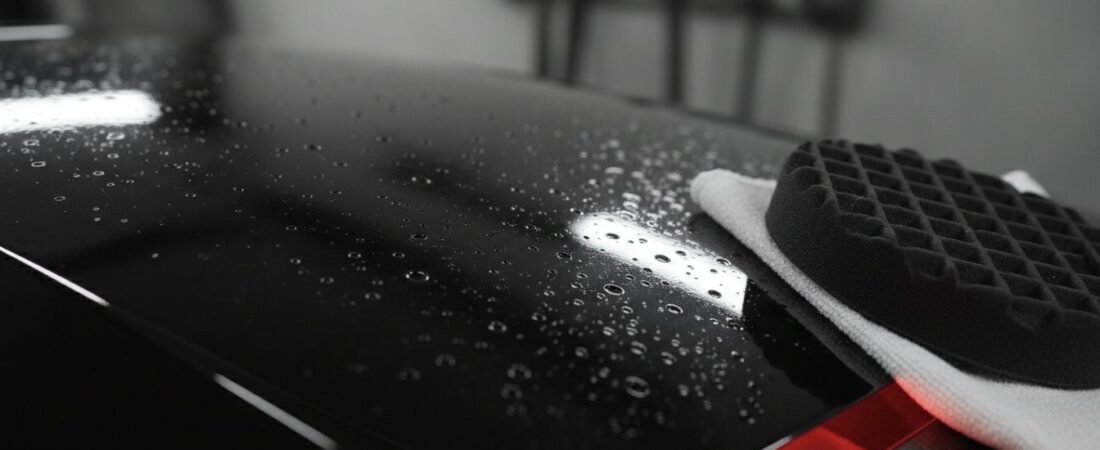
Fresh paint. Two weeks old. And under a light held at the right angle, dozens of tiny craters scattered across the panel. Most people’s first instinct: dirt in the paint, and a polish will sort it. It isn’t dirt, and a polish will make it worse.
I’m a certified master paint technician (B&P TEAM, 2019). This is a trade-insider one: a defect the paint trade knows on sight and customers rarely get told, because explaining it means explaining how it happened. I’m not doing this to get anyone in trouble. I’m doing it because an owner who can name a defect correctly gets a completely different conversation than one who says “there’s bits in it.”
I’ve produced this defect myself. Anyone who has sprayed for a living has. It isn’t exotic and it isn’t a sign of a bad painter. It means that on that panel, on that day, the film went on faster than the solvent could get out.
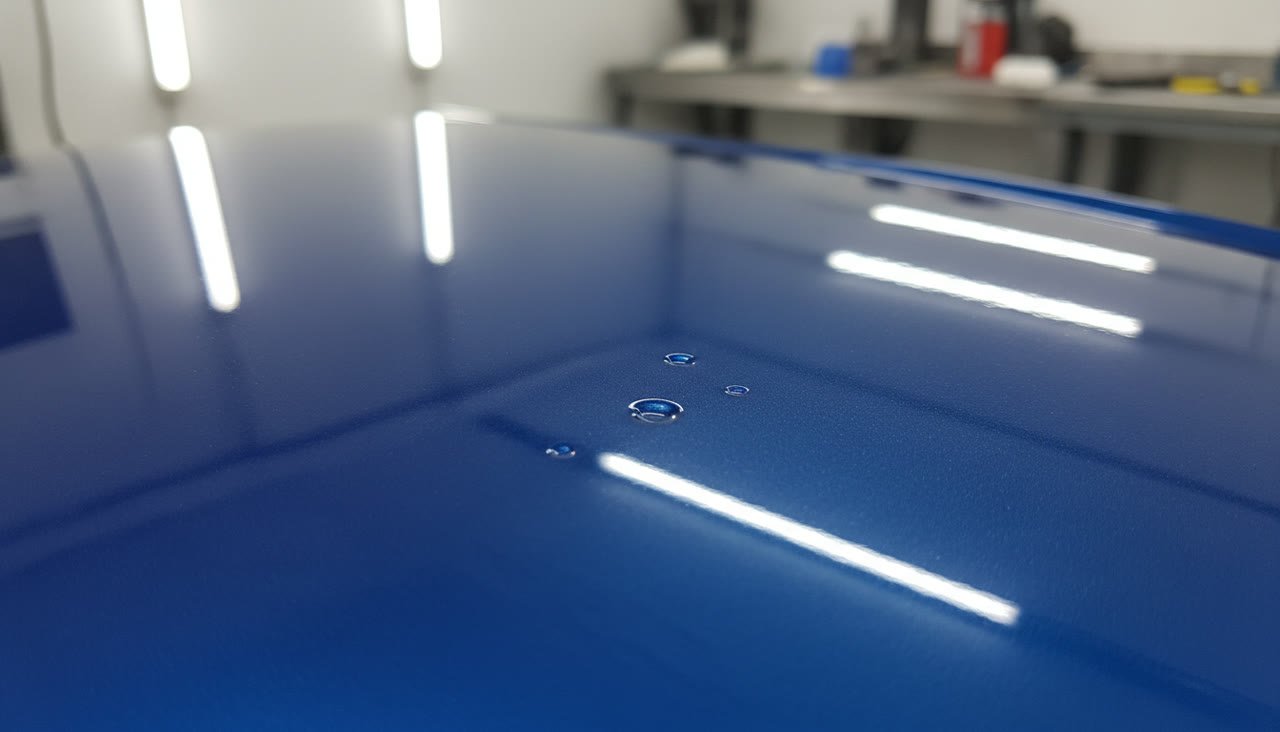
What’s Happening in the Film
Paint goes on carrying solvent, which keeps it liquid enough to flow out flat. That solvent then has to travel up through the film and evaporate. Meanwhile the film is also setting. It’s a race: solvent going up, film hardening downward from the surface.
Usually solvent wins. But if the surface sets first (film too thick, not enough time between coats, or heat arriving before the solvent left) then solvent is trapped under a skin. It still has to get out, so it pushes through and leaves a hole shaped like something that came from below. That’s solvent pop. Not contamination. The film’s own solvent escaping late.
Why Polishing Makes It Worse
Polishing removes a small amount from the top of the film until the surface is level with the bottom of a defect. That works on a scratch, which is shallow and on the surface. Solvent pop goes into the film, because it came from down there. Take the top off and you find more of the crater. You haven’t removed it, you’ve exposed a wider cross-section. The panel usually looks worse, and you’ve spent film thickness you can never get back. This isn’t a polishing defect, and no amount of skill makes it one.
Telling It Apart: One Light, One Angle
- Dirt inclusion: something is in it: a speck, a fibre, a raised bump with a hard centre. It sticks up as much as down.
- Solvent pop: nothing in it. An absence: a small empty crater, open at the top, nothing raised. Scattered, often in the thicker areas: lower sections, edges, anywhere film built up.
- Degradation (failing clear coat) arrives years later and spreads. Solvent pop is present the day the car leaves the shop and never changes. It’s a fixed record of one afternoon. If it was there from new and hasn’t moved, that’s your answer.
What to Do, in Order
- Don’t touch it. Don’t polish it, fill it, or get a mobile guy to blend it. Each makes the panel harder to put right and weakens your position, because now nobody can tell what was original.
- Photograph it properly in raking light, low angle. Straight-on flash photos show nothing, which is why this defect so often gets dismissed over a phone.
- Use this sentence: “This looks like solvent pop to me. It was there when I collected the car. Can you have a look at it in raking light?”
That sentence names the defect correctly, establishes it was there from collection (the fact that matters), and asks for the one viewing condition where it’s actually visible, so nobody can look at it under a flat strip light and say they see nothing.
I’m not going to tell you what happens next or what it should cost. That’s between you and the shop and depends on the panel. What I can tell you is that this defect belongs to the people who applied the film. Not to you, and not to your polisher.
There are no product links here. Nothing you can buy fixes it.
Who is responsible?
If the paint was done recently, speak to the painter promptly and show them the panel in a good light. Take clear photos from several angles, keep your paperwork, and ask what their guarantee covers. Most reputable shops would rather fix a defect than argue about it.
What not to do
- Do not cut or compound the craters out, which removes more paint and can make them wider.
- Do not wax or seal the panel until the paint has fully cured and the problem is resolved.
- Do not leave it for months without telling the painter.
The fix is usually to let the paint cure fully and then have it levelled and refinished properly, rather than trying to polish around the defect.
Quick FAQ
What is solvent pop? Tiny craters where solvent trapped under a set skin of paint pushed through late.
Can solvent pop be polished out? No. It goes into the film, so polishing only exposes a wider crater.
What should I say to the paint shop? “This looks like solvent pop. It was there when I collected the car. Can you have a look at it in raking light?”
No product links in this post: nothing sold in a bottle fixes it, and I don’t link products I’d be guessing about.
Related posts: Paint Delamination · Oxidised Chalky Paint · Paint Blistering · Fisheyes in Car Paint
Master guide: wash mitt vs sponge and the safe wash method