
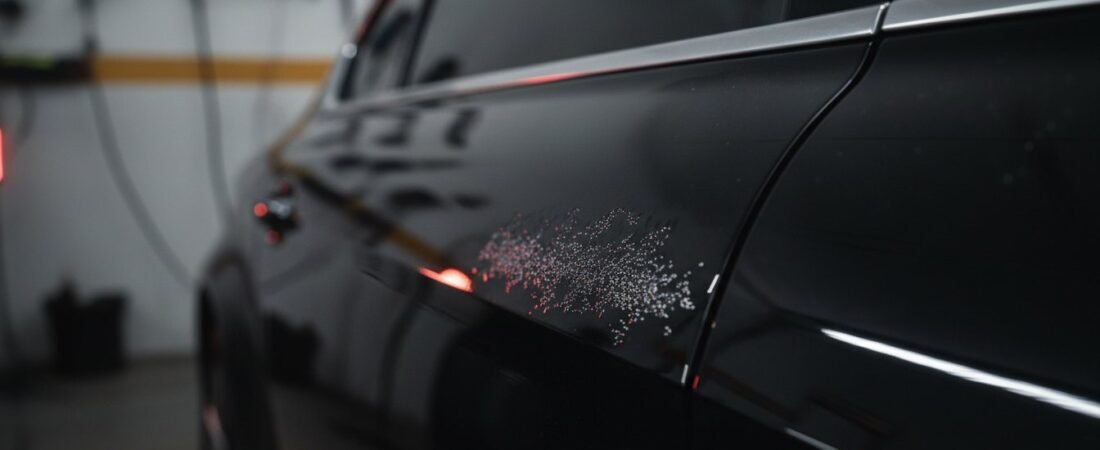
Every panel on a car can be fine except one, with a pattern of clustered bumps, all on one panel, stopping dead at the panel edge. That’s not stone chips, and it isn’t rust coming through. That’s blistering, and here’s what makes it interesting: it was created during a repair, possibly three years before it appeared.
I’m a certified master paint technician (B&P TEAM, 2019). This is one of a run of defects nobody who owns the car caused: not the weather, not the washing, not neglect. Built in, by a process that went wrong in a room the owner never saw.
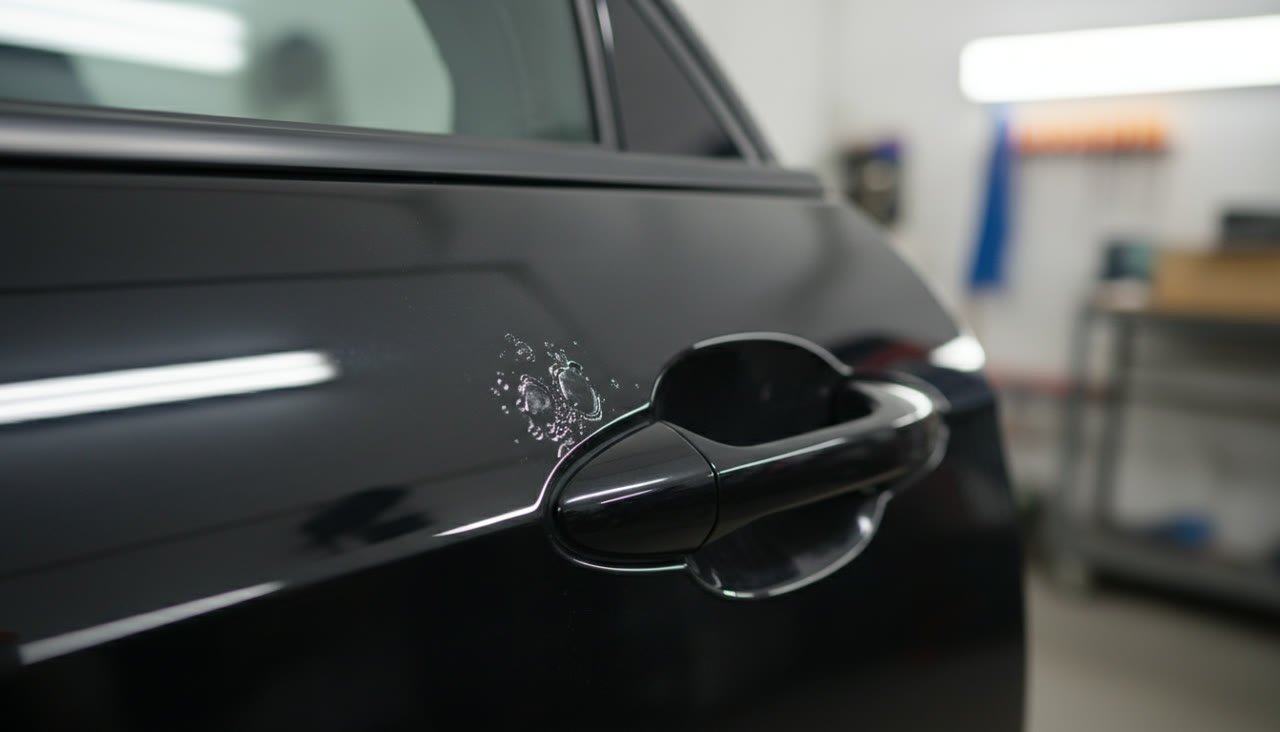
What a Blister Physically Is
A coating pushed away from what it’s stuck to, from underneath, by something trapped between. Two things get trapped:
- Moisture (the common one). If a panel isn’t properly dry when coated, you’ve sealed water under a layer that doesn’t let water through easily.
- Contamination: residue, dust or something that shouldn’t be there, sealed in the same way.
Why It Appears So Long Afterwards
Trapped moisture doesn’t just sit. Coatings aren’t perfectly impermeable: water vapour moves slowly through them in both directions. On a hot day the moisture expands and pushes. On a cold night it contracts. Sun, heat, humidity, repeat. Each cycle works the bond a little, and at the weakest point (where adhesion was already marginal) it eventually gives and lifts into a dome.
Osmotic blistering is a specific version: something water-soluble trapped underneath draws moisture through the coating toward it, raising pressure until it lifts. Same outcome, driven from inside.
That’s why the repair looks perfect when it leaves the shop, and for months, often a year or more. A car repaired in November gets through winter and a mild spring, then its first real summer, and something starts on one door. By then nobody connects the two. The defect isn’t mysterious. It’s just separated from its cause by enough time that nobody looks backwards.
Is That What You Have? Three Candidates
| Look | Pattern | Underneath | |
|---|---|---|---|
| Blistering | Rounded domes, raised, soft-edged | Clustered, confined to a panel or part of one, stopping where the repair stopped | Usually intact paint or primer, not metal |
| Stone chips | Sharp-edged, irregular, depressed | Directional: leading edges, lower front, behind wheels | Material knocked out |
| Corrosion bubbling | Raised, irregular, lumpy | Starts at edges, seams, chips or drain points where water sits | Brown or exposed metal |
Corrosion is the most urgent of the three. One useful extra on a steel car: run a magnet along the panel. A weak or absent pull over a localised area suggests filler underneath, i.e. a prior repair, which supports the blistering reading.
Why You Can’t Fix It Yourself
The problem is underneath, same as delamination. A blister is a symptom of something trapped below the coating and a bond that has already failed locally. Anything you apply goes on top. Polish removes clear above it, a coating seals over it, and neither reaches the trapped material or stops the cycle driving it.
And don’t pierce it. It’s tempting, but all you do is open a path for water and contamination into a compromised bond.
What to Do
- Photograph it, note when and where any repair was done, and go back to the shop that did the work, politely, with dates. A cluster confined to one repaired panel is exactly the evidence that matters.
- If the original repair was long ago or unknown, get a body shop’s opinion on scope. The panel will need to be stripped back and refinished.
- Don’t apply polish or coatings over it. There are no product links here because nothing sold in a bottle addresses the cause.
What to ask a body shop
- Was this panel resprayed or repaired before, and how was it prepared?
- Was the old finish fully removed or painted over?
- What guarantee comes with the repaint?
- Can they show you the area once the paint is stripped back?
Is it worth repainting?
Blistering usually means the panel has to be stripped back to a sound surface and refinished, because the fault is under the paint. Get at least two quotes and ask each to explain what they would do differently so it does not happen again. For an older car, weigh the cost against the value of the car, and be wary of a cheap fix that only covers the problem.
Quick FAQ
Why are there bubbles in my car paint? Moisture or contamination trapped under the coating during a repair, pushed up by heat cycles months or years later.
How is blistering different from rust bubbles? Blisters are clustered, dome-shaped and confined to a repaired panel, with intact paint underneath. Rust bubbles start at edges and seams and show brown or exposed metal.
Can blistering be polished out? No. The defect is beneath the paint, so the panel needs refinishing.
No product links in this post: nothing sold in a bottle fixes it, and I don’t link products I’d be guessing about.
Related posts: Paint Delamination · Oxidised Chalky Paint · Tiny Craters in New Paint: The Defect No Polish Will Fix · Fisheyes in Car Paint
Master guide: the complete wash and polish guide