
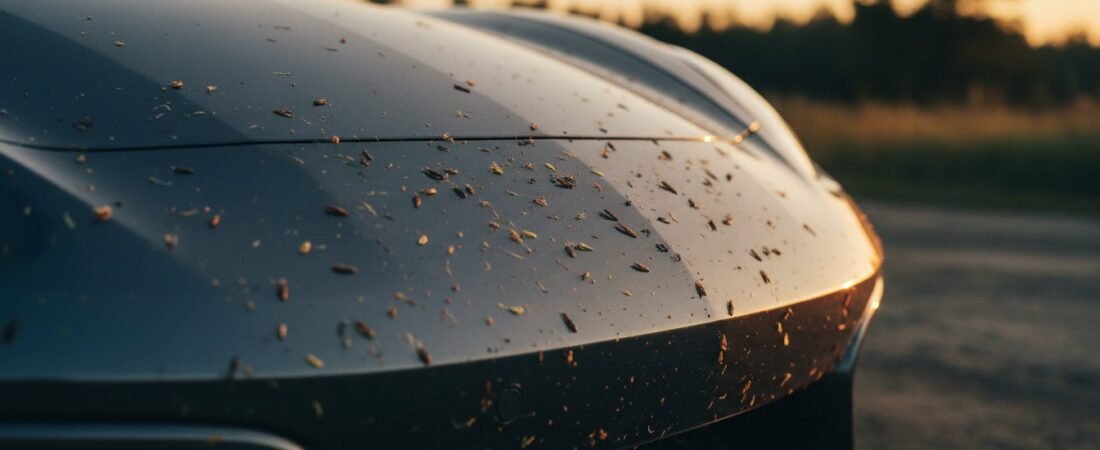
Three hours on the highway and your bumper looks like this. Most people leave it until the weekend. By then the damage is already in the paint, and no amount of washing takes it out.
Because what’s stuck to your bumper isn’t dirt. It’s a decomposing organism, cooking on the hottest panel of your car.
I’m a certified master paint technician (B&P TEAM, 2019). Bumpers and leading edges are the panels I’ve refinished most, and insect damage is a bigger share of that than stone chips.
The short answer
Bug remains leave acidic and enzymatic by-products that can etch paint as they bake on, so clean them the same day. Rinse, soak with bug remover for several minutes, then wipe gently with no pressure. Re-protect afterwards, because bug removers strip wax and sealant.
What you need
Picks that fit this job.
MR.SIGA Microfibre Towels (3-Pack)
A large microfibre for soaking, wiping and drying.
Check on AmazonAutoglym Rapid Ceramic Spray
Adds protection back after washing, claying or polishing.
Check on AmazonI picked these on listing quality and have not tested them yet. Affiliate links: as an Amazon Associate I earn from qualifying purchases, at no extra cost to you.
What’s Actually on Your Paint
An insect hitting your bumper at highway speed ruptures completely, leaving body fluids, gut contents and digestive material. Fresh, that mixture is mostly harmless and rinses off. Then, as it decomposes, bacterial breakdown generates acidic and enzymatic by-products in a thin film directly against your clear coat.
Two accelerators:
- Heat. Your bumper and bonnet leading edge are the hottest, most sun-exposed surfaces, and every chemical process speeds up with temperature.
- Drying. The remains shrink and grip, concentrating whatever’s active into a smaller, more aggressive patch.
So the splatter that would wipe off in thirty seconds on the day becomes an etched ring after a weekend in the sun.
Why the Front Is a Perfect Storm
It takes every impact, it’s the hottest area when you stop, and most bumpers are painted plastic, which holds heat instead of conducting it away. It’s also the area people protect least, since wax and sealant on a bumper get blasted off by grit and pressure washing faster than anywhere else. Most contamination, most heat, least protection. That’s why your bumper looks a decade older than the rest of the car.
Removal: Soften First, Contact Last
- Shade and a cool panel. Product flashing off a hot bumper leaves streaks and, with alkaline removers, risks staining.
- Pre-rinse with lots of water at low pressure, top down. A surprising amount leaves without contact.
- Soak and dwell. Dedicated bug remover (or a strong shampoo solution), applied generously and left several minutes. Keep it wet and re-mist if it starts drying. You’re dissolving the bond, not scrubbing.
- Then contact, gently. A bug sponge or open-mesh pad, or a plush microfibre, in straight lines with no pressure. Rinse the pad constantly, because insect remains contain chitin, which is hard and abrasive.
- Repeat the soak rather than increasing pressure. Two dwells beat one scrub.
- Rinse thoroughly and re-protect. Bug removers are typically alkaline and strip wax and sealant.
- Plush microfibre: MR.SIGA Microfibre Towels (3-Pack)
- Re-protect: Autoglym Rapid Ceramic Spray
Bugs Are Off but There Are Rings
- Faint dull marks or light rings sit in the top of the clear and usually polish out with a light finishing polish.
- A defined crater you can feel with a fingernail is deeper, and on a bumper that’s a genuine problem because plastic bumper paint is often thinner than panel paint.
- A whole bumper gone uniformly dull and slightly rough after years of untreated seasons is thousands of etches. That’s usually a refinishing job, and the most common reason a five-year-old car’s bumper doesn’t match its wings.
Prevention, in Order of Work Saved
- Clean the front the same day. Not the car, just the front. Five minutes with quick detailer and a plush towel in a shaded car park and none of the rest applies to you.
- Protect the front specifically, and more often. A sealant or coating on the bumper, mirrors and bonnet leading edge means remains bond to the protection instead of your clear. Redo it twice as often as the rest of the car.
- Carry the kit. A small bottle and two microfibres in the boot turn a servo stop into a fix.
- For long highway drivers, paint protection film on the bumper and bonnet edge stops being a luxury and becomes cheaper than the refinish.
The Rule
Never dry-scrub. Bug removers are often alkaline, so don’t let them dry on paint or trim.
Quick FAQ
Do dead bugs damage car paint? Yes. Decomposition creates acidic and enzymatic by-products, and heat and drying accelerate the damage.
How do you remove baked-on bugs? Soak with bug remover for several minutes, then gently wipe with a mesh pad or plush microfibre. Repeat rather than scrub.
Can I use a household cleaner? A strong shampoo solution can work for fresh bugs, but avoid abrasive scrubbing.
Affiliate disclosure: Some links in this post are Amazon affiliate links. As an Amazon Associate I earn from qualifying purchases, at no extra cost to you. Prices on Amazon change, so check the current price there. I haven’t personally tested every product yet, and I’ll update this post with honest verdicts as I do.
Related posts: Bird Poop Damage · Tree Sap · Road Tar: The Silent Paint Killer (and It’s Not the Tar)
Master guide: the complete wash and polish guide