
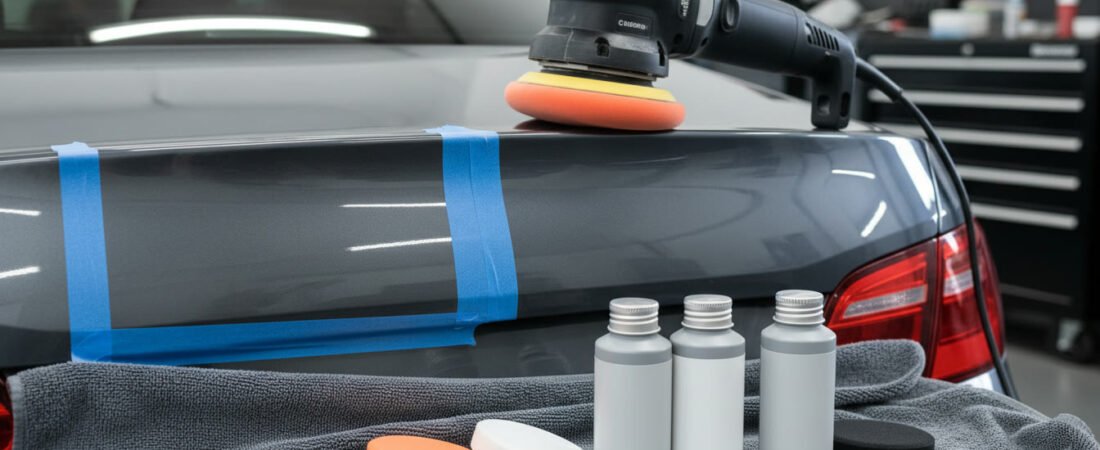
“Polish” on a bottle can mean three different things, and buying the wrong one is the usual reason people either get no result or take more paint than they needed to. Here is how to read the shelf.
Compound, polish or all-in-one
- Compound: the most cutting. For heavier swirls and defects. It finishes with its own fine haze, so it usually needs a finer polish after it.
- Polish: finer abrasives. For refining the finish, adding gloss and removing light swirls.
- All-in-one (AIO): one step that cleans, polishes and protects. A sensible compromise for speed, but it is a compromise.
Start with the least aggressive thing that works
Do a test spot with a polish and a soft finishing pad first. Only step up to a compound if the test spot does not give you enough. Every step removes a little clear coat, and you cannot put it back. If the defect is a deep scratch, read can you polish out deep scratches before you try.
Machine or hand
Hand polishing is fine for small areas and very light defects. A machine does far more correction with far less effort and a more even result. Either way, preparation matters: wash, decontaminate and dry first. Our complete wash and polish guide covers the order.
Diminishing vs non-diminishing abrasives
Diminishing abrasives break down as you work them, so the finish gets finer the longer you work. Non-diminishing abrasives keep cutting the same amount, so they usually need a separate finishing step. The label may not say which; the product description often does.
What the label should tell you
- How much cut it has versus how fine it finishes.
- Whether it is for machine, hand, or both.
- Working time, meaning how long you have before it dries.
- Whether it contains fillers. Fillers can hide scratches for a while, then wash out and the scratches come back.
Know your limits
Clear coat is thin. Edges and body lines are where people burn through first. If you are going to use a machine, read polishing edges and body lines and why polishing leaves haze before your first panel.
How to choose in 30 seconds
- Light swirls and gloss: a polish.
- Moderate swirls: a compound followed by a polish.
- Not sure and want one bottle: an all-in-one.
- Not sure at all: test a small area before you buy a large bottle.
A safe way to test before you commit
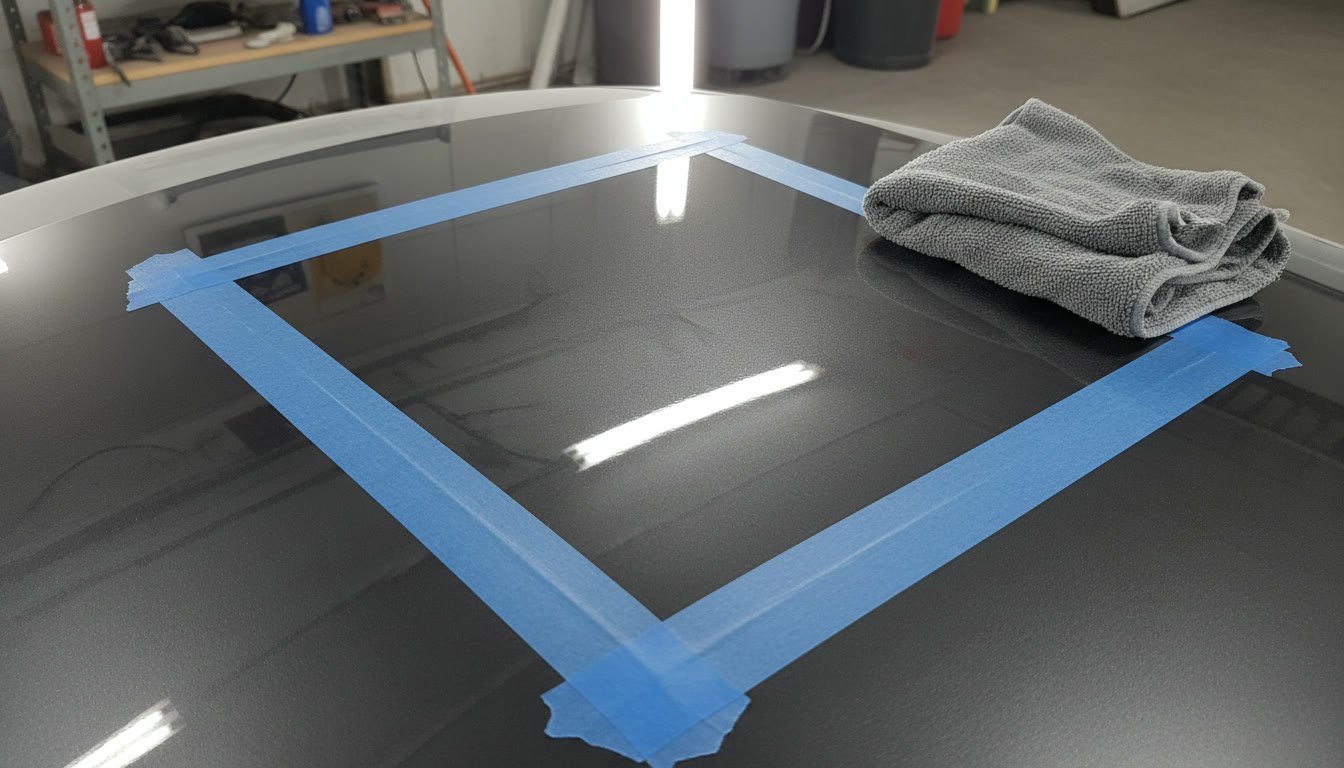
Before polishing the whole car, pick a small, flat spot such as a section of the boot lid and mark it with masking tape. Start with the lightest polish and a soft pad, make a few slow overlapping passes, wipe the residue off with a clean microfibre and check the result under good light. If the defect is still there, step up to a slightly stronger pad or product and test again. Once you find the gentlest combination that works, use the same setup across the rest of the panel. This one habit prevents most polishing accidents because you only take off as much clear coat as you need.
Common polishing mistakes
- Starting with a heavy compound when a fine polish would do.
- Working too large an area at once, so the product dries before you finish.
- Pressing hard on edges and body lines, where the paint is thinnest.
- Skipping the wash and clay step, which drags grit across the paint.
- Not wiping the panel with panel-wipe or isopropyl to check the real result, since polishing oils can hide remaining marks.
If you are unsure, practise on a scrap panel or the least visible part of the car first. When a defect looks deep enough that you can feel it with a fingernail, it may be beyond what a DIY polish can safely remove.
Pads and products: a basic pairing guide
As a general rule, foam cutting pads work with compounds, polishing pads with polishes, and soft finishing pads with fine finishing polishes. Microfibre pads cut more aggressively than foam, which can be useful on hard clear coat but is easier to overdo. Always start with the least aggressive pairing that removes the defect, and clean or swap pads when they become saturated, since a clogged pad stops cutting evenly and runs hot. Good lighting, a clean work area and patience matter more than any single product.
If a job calls for repeated aggressive passes, stop and measure what is left. Clear coat is thin, and once it is gone it cannot be put back without a repaint.
Frequently asked questions
Is polish the same as wax?
No. Polish removes a thin layer of paint to level the surface. Wax adds a protective layer on top. You polish first, then protect.
How often can I polish a car?
As rarely as you can. Polishing removes clear coat. Use the gentlest option that works and keep the car in good condition between sessions.
Related posts: You Made It Worse: Fixing the Haze After Polishing · Don’t Polish the Edges: Why Body Lines Burn Through First · The Body Shop Secret Nobody Explains: Die-Back and Sand Scratch Swelling