

Ceramic coating gets thrown around a lot as the answer to every paint problem, but it’s not the right move for every car at every stage. Here’s how to tell if your vehicle is actually ready for it.
1. Water stops beading and starts sheeting
A healthy wax or sealant makes water bead up into tight little balls. Once that beading flattens out into sheets, your protection has broken down and the clear coat is exposed to whatever’s in the air.

2. You’re waxing more than every few months
If you’re reapplying wax every four to six weeks just to keep the shine up, you’re spending more time and money maintaining protection than a ceramic coating would ever ask for.
3. The paint is already corrected
Coating locks in whatever is underneath it. Swirl marks, light scratches, and oxidation all get sealed in place if you skip paint correction first. Coating should always go on after correction, never instead of it.
4. You daily-drive the car
Cars that sit outside and rack up daily miles take the most abuse from UV, bird droppings, tree sap, and road grime. That’s exactly the environment where a multi-year ceramic coating earns its cost back the fastest.
5. You want fewer trips to the wash bay
Coated paint releases dirt and water far more easily, which means faster washes and less scrubbing. If you’re tired of fighting stubborn grime every weekend, this is usually the sign that pushes people to book it.
What ceramic coating actually does
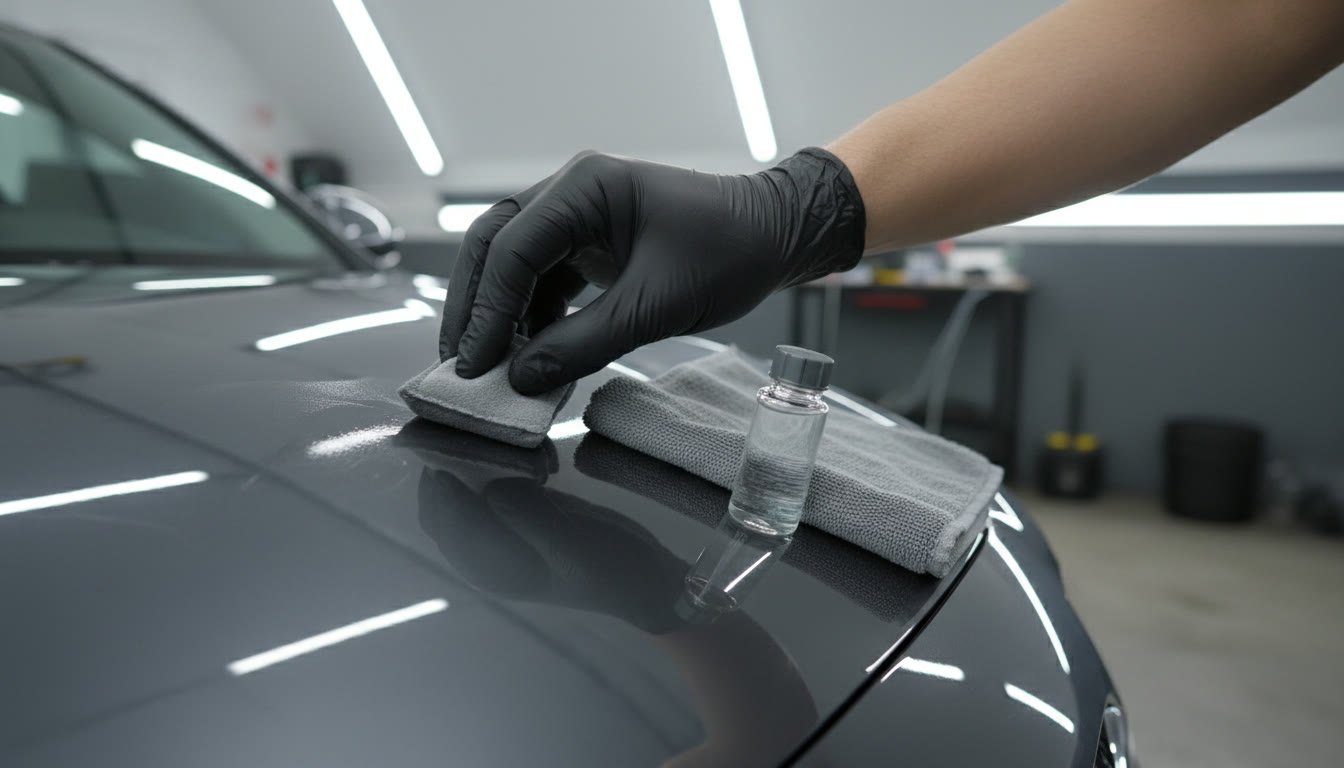
A ceramic coating is a thin, hardened layer that bonds to the clear coat. It makes the surface slicker and more hydrophobic, so water, dirt and road film release more easily, and it adds some resistance to light chemical staining. What it does not do is make paint scratch-proof or stop stone chips. It does not replace washing either. Think of it as an easier-to-clean surface, not armour.
Prep is most of the work
Most of the time and cost in a proper coating job is preparation, not the coating itself. The paint needs to be washed, decontaminated (iron remover and clay), and usually machine polished so the coating is not locking in swirls or haze. Any oils from polishing are then wiped off before the coating is applied. If any of those steps is skipped, the finish will not look as good and may not last as long as promised.
Questions to ask before you book
- What prep is included, and is paint correction part of the price?
- How long does the coating need to cure, and when can I wash the car?
- What maintenance does it need (wash method, products, any top-up product)?
- Is the lifespan claim a product claim or a track record, and what does the warranty cover?
Signs you should wait
Hold off if the paint has failing or peeling clear coat, deep scratches you are not willing to polish out first, or you cannot keep the car clean and garaged for the cure period. A coating on damaged paint just seals in the problem. In that case, a good polish and a simple sealant can be the smarter spend until the paint is in a state worth protecting.
How to keep a coating working
A coating needs a gentle routine to stay slick and easy to clean. Wash with a pH-neutral shampoo using a two-bucket method, dry with a clean microfibre, and avoid automatic washes with stiff brushes. An occasional use of a coating maintenance spray or a light decontamination wash keeps the surface clean so water keeps sheeting off. If the surface starts to feel rough or water stops behaving the way it used to, a clay or iron-remover treatment often brings the performance back before any reapplication is needed.
Be realistic about lifespan claims. Quoted years of protection assume good prep, correct application and regular maintenance. A coating on a car parked outdoors in strong sun and washed with harsh detergents will not last as long as one on a garaged car washed gently by hand.
If you are on the fence, a good middle step is to start with a quality sealant for a season. It gives you most of the easy-wash benefit at a lower cost, and it lets you see how well you keep up with maintenance before you invest in a coating.
Not sure which category your car falls into? Bring it by and we’ll take a look at the paint before recommending anything — coating included.
Ceramic coating only lasts over properly prepped paint. For the wash and polish steps that come first, read our full guide: how to wash a car without scratching it.
Watch: related video
A video from the Vehikolo channel on this topic. Voice and visuals are AI-generated.
Related posts: DIY vs. Professional Detailing: What’s Actually Worth Paying For · 5 Simple Checks That Can Save You From a Costly Repair · Swirl Marks: Nobody Did That to Your Car. You Did.