
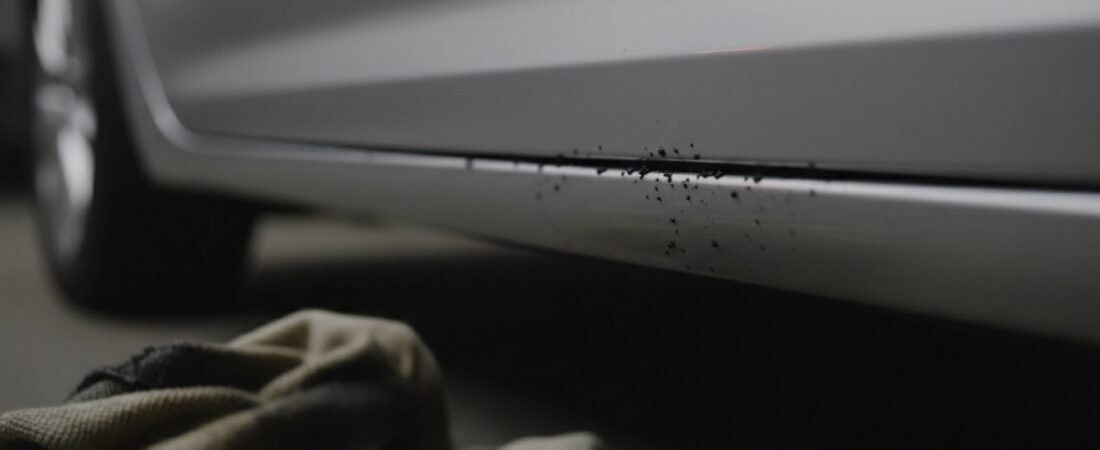
See those black specks along the bottom of your doors? You’ve washed the car three times and they’re still there. That’s road tar, and here’s what most people get wrong: scrubbing at it creates scratches without removing it. Use the right chemistry and it takes zero effort. It just melts away.
I’m a certified master paint technician (B&P TEAM, 2019). Tar is the contamination I see cause the most unnecessary damage, and not from the tar itself, from what people do to remove it.
The short answer
Tar needs a solvent, not scrubbing. On a washed, cool panel, apply tar remover, leave it 30 to 60 seconds, wipe once and repeat rather than press. Then rinse and re-protect.
What you need
Picks that fit this job.
MR.SIGA Microfibre Towels (3-Pack)
A large microfibre for soaking, wiping and drying.
Check on AmazonClay Bar (2 x 100g)
Removes bonded contamination a wash leaves behind. Use plenty of lubricant.
Check on AmazonAutoglym Rapid Ceramic Spray
Adds protection back after washing, claying or polishing.
Check on AmazonI picked these on listing quality and have not tested them yet. Affiliate links: as an Amazon Associate I earn from qualifying purchases, at no extra cost to you.
Why Shampoo Can’t Touch It
Roads are aggregate held together by bitumen, a heavy hydrocarbon binder. On a hot day or freshly resurfaced road it softens, your tyres flick it up, and it lands on the lowest, most exposed parts of your car, then cools and grips.
Bitumen is non-polar and oily. Water is polar. They don’t interact. Car shampoo is designed to lift dirt and light road film at safe dilutions. It’s not designed to dissolve a heavy hydrocarbon, and it doesn’t. That’s not your shampoo failing. That’s chemistry declining to happen. Dissolve it with something that matches it (a hydrocarbon or citrus-terpene solvent, which is what a dedicated tar remover is) and it gives up instantly. Five seconds instead of five minutes of scrubbing.
Where the Damage Really Comes From
A tar speck isn’t pure bitumen. It picked up road grit on its way to your car: quartz, aggregate dust, fragments of road. It’s a sticky blob with sand in it. Scrub it with a mitt and you’re pressing an abrasive-loaded blob against your clear coat and dragging it in circles. It also smears, because warm tar under friction goes soft, so one speck becomes a streak, plus a field of scratches underneath.
The specks are cosmetically trivial. The response to them isn’t.
The Method (Order: Tar, Then Iron, Then Clay)
- Shade, cool panel. Solvent on a hot surface evaporates before it works and leaves streaks.
- Wash first. Get loose grit off before any contact. Tar removal on a dirty car is just controlled sanding.
- Apply generously, directly on the tar. Dwell 30–60 seconds. You’ll see the specks slump and run. Don’t touch it while it works.
- One wipe, one direction, clean towel face. The dissolved tar in your towel is still abrasive and sticky. Fold to a fresh face and use a towel you’re happy to bin.
- Repeat rather than press. A second application beats pressure.
- Rinse and re-protect. Solvents strip wax and sealant on the areas you treated, usually the lower panels that get the most road spray.
- Towels: MR.SIGA Microfibre Towels (3-Pack)
- After decon: Clay Bar (2 x 100g) · re-protect with Autoglym Rapid Ceramic Spray
Safety: solvent PPE, shade, don’t let it dry, and keep tar removers off fresh paint and some plastics and rubber.
Does Tar Actually Damage Paint If You Leave It?
Honestly, far less than most contamination. It sits on the surface rather than attacking it, and on healthy, protected clear coat a properly removed speck usually leaves nothing. Two caveats: left long on hot, unprotected paint, lighter fractions can stain the very top of the clear (a faint shadow that polishes out), and tar sitting in a stone chip that’s through to primer or metal is a repair job, not a cleaning one.
Five Things I See
- Attacking it with the wash mitt mid-wash. You’ve loaded the mitt that’s about to touch your bonnet with grit and tar. Note it and deal with it afterwards with a separate towel.
- Petrol or diesel off the forecourt. It dissolves tar, but it’s a fire risk, leaves residue, and is harsh on trim and rubber.
- Letting remover run onto plastic trim, rubber seals or a wheel and dry. Wipe as you go.
- Using it on fresh paint. Solvent on a curing repair is a genuinely bad idea.
- Doing the whole car. Tar lives on sills, lower doors, behind arches and the rear bumper. Treat those and save your protection everywhere else.
Try This
Run your hand along the bottom of your driver’s door. Whatever you feel there is what this post is about.
Quick FAQ
What removes road tar from a car? A dedicated tar remover (hydrocarbon or citrus solvent), applied, left 30–60 seconds, then wiped once with a clean towel.
Can I scrub tar off with soap and a mitt? No. Shampoo can’t dissolve it, and scrubbing drags grit-loaded tar across your paint.
Is it OK to use petrol to remove tar? Avoid it. It’s a fire risk and harsh on trim and rubber.
Affiliate disclosure: Some links in this post are Amazon affiliate links. As an Amazon Associate I earn from qualifying purchases, at no extra cost to you. Prices on Amazon change, so check the current price there. I haven’t personally tested every product yet, and I’ll update this post with honest verdicts as I do.
Related posts: Bug Splatter · Why Soap Won’t Clean Your Car: Traffic Film · The Sprinkler of Death: How to Remove Water Spots
Master guide: how to wash a car without scratching it